Author – Rashid Ali
Introduction: Madhya Pradesh is home to hard-working farmers. However, with serious problems like water scarcity, just like many other regions of Central India, we need to irrigate our crops properly and strategically for better yield because of our over-dependence on groundwater, erratic rainfall, and the possibility of dry spells. This blog post describes crucial procedures to improve the amount of water availability to the crops, resulting in a more reliable and profitable yield, while also conserving our valuable water resources in the field.

The Best Safe Irrigation Practices:
The practices are to apply water directly to the plant’s root zone.
1.1 Micro-Irrigation Systems:
- Drip Irrigation: This drastically saves water consumption while potentially increasing crop yield by ensuring plants receive a regular supply just when they need it. It is best suited for high-value crops such as horticulture and some vegetables.
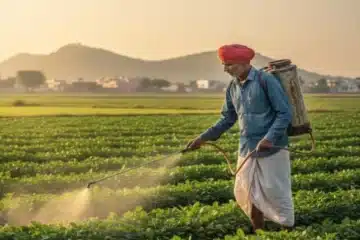
- Sprinkler/Micro-Sprinkler Systems: These look similar to rainfall and are more efficient than flood irrigation, particularly for crops with close spacing, such as pulses, cereals, and some oilseeds.
1.2 Water Scheduling and Monitoring:
- Soil Moisture Sensors: You can determine the precise amount of moisture in your soil with sensors that are affordable. Overwatering is avoided, saving energy, water, and labor.
- Weather-Based Irrigation Scheduling: Use local weather forecasts to irrigate before a hot, dry stretch, and avoid irrigating when rain is expected.
2. Enhancing Water Availability: The most effective approach to boost water availability is to capture and store monsoon water right here on our land.
Rainwater Harvesting & Recharge:
- Check Dams and Farm Ponds: The construction of local check dams, catches surface runoff, allowing it to slowly percolate and recharge the groundwater table.
- Field Bunding (Medh Bandhi): Creating short, low earthen bunds around the crop helps to retain precipitation within the field, reducing runoff and improving soil moisture.
- Percolation Pits: Digging small, selective trenches allows surface water to quickly soak into the earth that supplies your wells and borewells.
2.2 Rejuvenate Traditional Water Bodies
- Village Tanks (Talabs): Clean traditional water bodies can significantly boost their ability to hold water during non-monsoon periods.
Making Every Drop Count
Soil is the largest water reservoir. Healthy soil functions like a sponge, retaining moisture for an extended length of time.
Soil Moisture Conservation practices:
- Mulching: Covering the soil surface with organic materials (crop debris, leaves, straw) or plastic sheeting to minimize water evaporation and control weeds.
- Minimum Tillage: Reducing deep plowing helps to keep soil structure healthy, preserving its natural ability to hold water and reducing topsoil loss by wind and water.
- Organic Matter: Incorporate compost, farmyard manure (FYM), and green manures. Organic matter acts like a soil conditioner, increasing the soil’s water-holding capacity.
Smart Cropping
In a drought-prone environment like Gandhwani, crop choice is just as crucial as irrigation strategy.
4.1 Adopt Drought-Resistant Crops:
- Millets (Jowar, Bajra, Ragi): They use less water than crops such as rice or sugarcane.
- Pulses (Tur/Pigeon Pea, Moong/Green Gram, Gram/Chickpea): These are inherently drought resistant and help to improve your soil by fixing nitrogen.
- Local, Adapted Varieties: Choose crop cultivars that have traditionally done well in the Gandhwani microclimate and soil type.
4.2 Crop Diversification and Rotation: Rotate with low-water crops and legumes to disrupt the cycle of high water demand and improve overall soil fertility and productivity.
Conclusion: The farming community of Gandhwani can collectively create awareness against drought and secure water security by implementing efficient irrigation systems, actively participating in rainwater harvesting, nurturing our soil, and making water-smart cropping decisions.
Image Source: