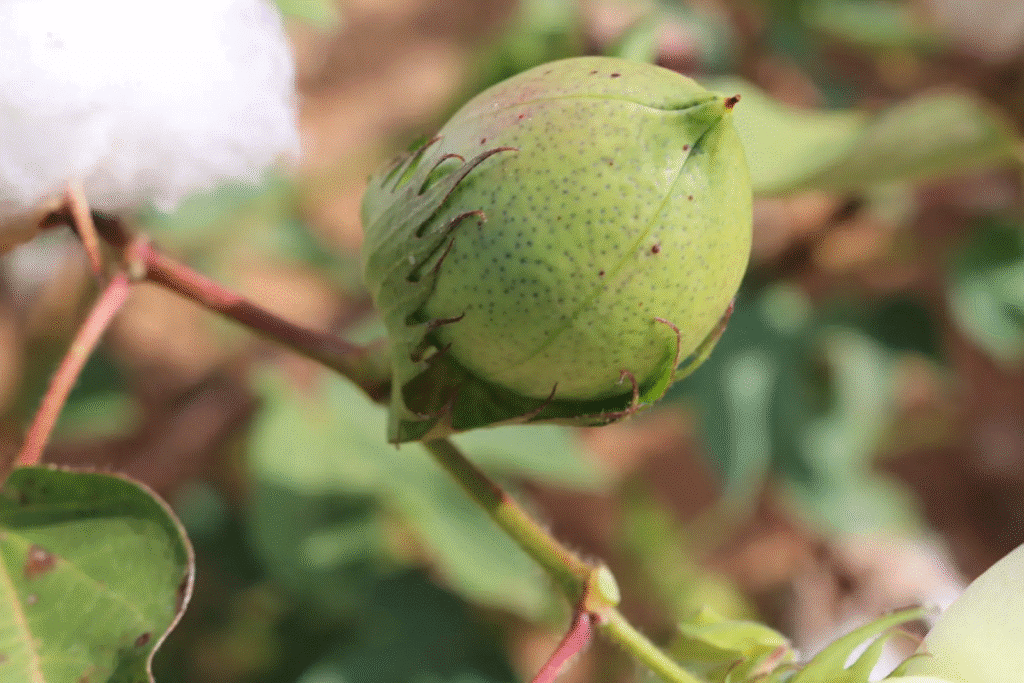
Cotton boll drooping, also known as boll shedding or square shedding, is one of the most important yield-limiting variables in cotton cultivation. Cotton plants lose their reproductive structures, squares (flower buds) and young boll (developing fruits), in response to a variety of stressors. Under normal growth circumstances, cotton plants lose around 60% of their squares and young bolls, but excessive shedding has had a negative influence on production potential.
What makes cotton bolls droop
The main reasons for cotton bolls drooping are abiotic and biotic stresses:
1. Water Stress: When there is an abundance of water or a drought, bolt shedding may happen more often. While wet soils hinder roots’ access to oxygen, leading to increased ethylene production and fruit shedding, drought hinders cotton’s ability to transport nutrients and maintain cell turgor.
2. Nutrient imbalance: A lack of potassium directly impacts boll retention and stiffness. Too much nitrogen, on the other hand, may produce lush but weak growth, resulting in boll droop.
3. Extreme temperatures and inadequate light: Cotton output and boll retention are significantly impacted by high temperatures, both during the day and at night. Studies show that higher temperatures, particularly at night, result in considerable losses in cotton seed and lint output as well as decreased pollen generation and fruit retention.
4. Disease and pest pressure: Fungi and bacteria may cause cotton bolls to rot from the inside out and fail to develop. Bolls that are diseased may seem to be in fine condition on the outside, but they will not open properly and will contain discoloured lint. Insects, such as the red cotton insect, may transfer illnesses or cause direct harm to plants.
5. Effect on yield and fibre quality: Studies consistently demonstrate that drooping and consequent boll loss diminish both output and fibre quality. In experiments with heat or water stress, seed cotton production dropped substantially. For example, very high day and night temperatures caused the lint percentage to drop by 26% and the seed weight to drop by up to 86%. Boll rot is caused by diseases that make bolls stay closed, make the fibre texture worse, and diminish the value of the cotton.
Ways to manage and stop things
To stop bolls from drooping, use these research-backed methods:
1. Best Water Management: Keep the soil moist, but not too wet. Several studies have shown that drip irrigation systems may prevent bolls from falling off while increasing yields. Make sure the field drains effectively to reduce the risk of waterlogging.
2. Balanced fertilisation: Use soil testing to decide how much fertiliser to apply, ensuring that there is adequate potassium but not too much nitrogen. Field trials with potassium nitrate foliar sprays revealed that they made the bolls more turgid and retained them longer.
3. Managing temperature and microclimate: Plant at densities that encourage air flow and light to get through. In China, research showed that moderate planting densities reduce competition, improve boll dispersal, and stabilise yields.
4. Timely pest and disease control: Keep an eye out for pests and use integrated pest management, which includes biological measures. Use fungicides or bactericides as soon as you see the first signs of fungal or bacterial boll rot.
5. Growth regulators: Anti-ethylene compounds like amino ethoxyvinyl glycine (AVG) may help keep fruit from falling off, particularly when there is a lot of ethylene being generated because to water stress or inadequate root zone aeration.
Conclusion
The crop is under stress if many cotton bolls are drooping, which might significantly reduce the yield and fibre quality. Water management, nutritional balance, timely disease and pest treatment, and plant density control are all critical components of an integrated approach. According to research, using preventive measures and routinely monitoring bolls is the best way to maintain their health and erectness while preserving cotton output.
References:
https://pmc.ncbi.nlm.nih.gov/articles/PMC8645204/
Image source: https://felixinstruments.com/blog/near-infrared-spectroscopy-accurately-measures-maturity-of-unopened-cotton-bolls/
https://jaf.su.edu.pk/uploads/journals/Article-10_Fina1_docx.pdf
https://www.sciencedirect.com/science/article/pii/S2214514120301252
https://cotton.org/beltwide/proceedings/getPDF.cfm?year=1998&paper=M001.pdf
https://www.frontiersin.org/journals/plant-science/articles/10.3389/fpls.2025.1616982/full
https://pmc.ncbi.nlm.nih.gov/articles/PMC8241606/
https://plantdiseasehandbook.tamu.edu/industry-specialty/fiber-oil-specialty/cotton/
https://plantwiseplusknowledgebank.org/doi/full/10.1079/pwkb.20147801430